
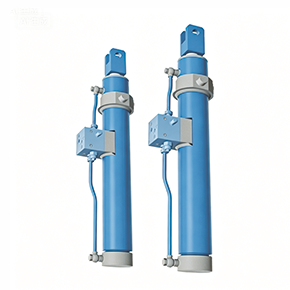
For operations conducted on or beneath the water surface, wave‑compensation technologies are required, which can be categorized into active wave‑ compensation systems, passive wave‑compensation systems, and hybrid configurations combining both.
Active wave compensation: Secondary‑control hydraulic winches, variable‑frequency electric winches, or hydraulic cylinders. The latter can also be used for passive wave compensation or for a combination of active and passive wave compensation. Install constant‑tension systems and passive and/or active wave‑compensation systems to counteract relative motion between the vessel and fixed structures, such as wellheads or other offshore installations on the seabed.
Key Technical Advantages:
• Enhance environmental adaptability through high-speed compensation and high load capacity.
• By implementing an intelligent energy management system, electricity demand is reduced, thereby lowering operational costs.
• Redundancy enhances safety. Passive compensation remains operational during power outages;
• Highly accurate and highly controllable for the operator.
Scope of application:
• Active compensation on the hydraulic winch;
• Active compensation on the electric winch;
• Active compensation on the hydraulic cylinder;
• Constant tension on the winch and hydraulic cylinders;
• Load leveling on winches and hydraulic cylinders
• Energy storage system for wave compensation systems
Need Similar Hydraulic Engineering or System Integration?
Our fluid power engineering team provides custom valve block design, system sizing, and commissioning.